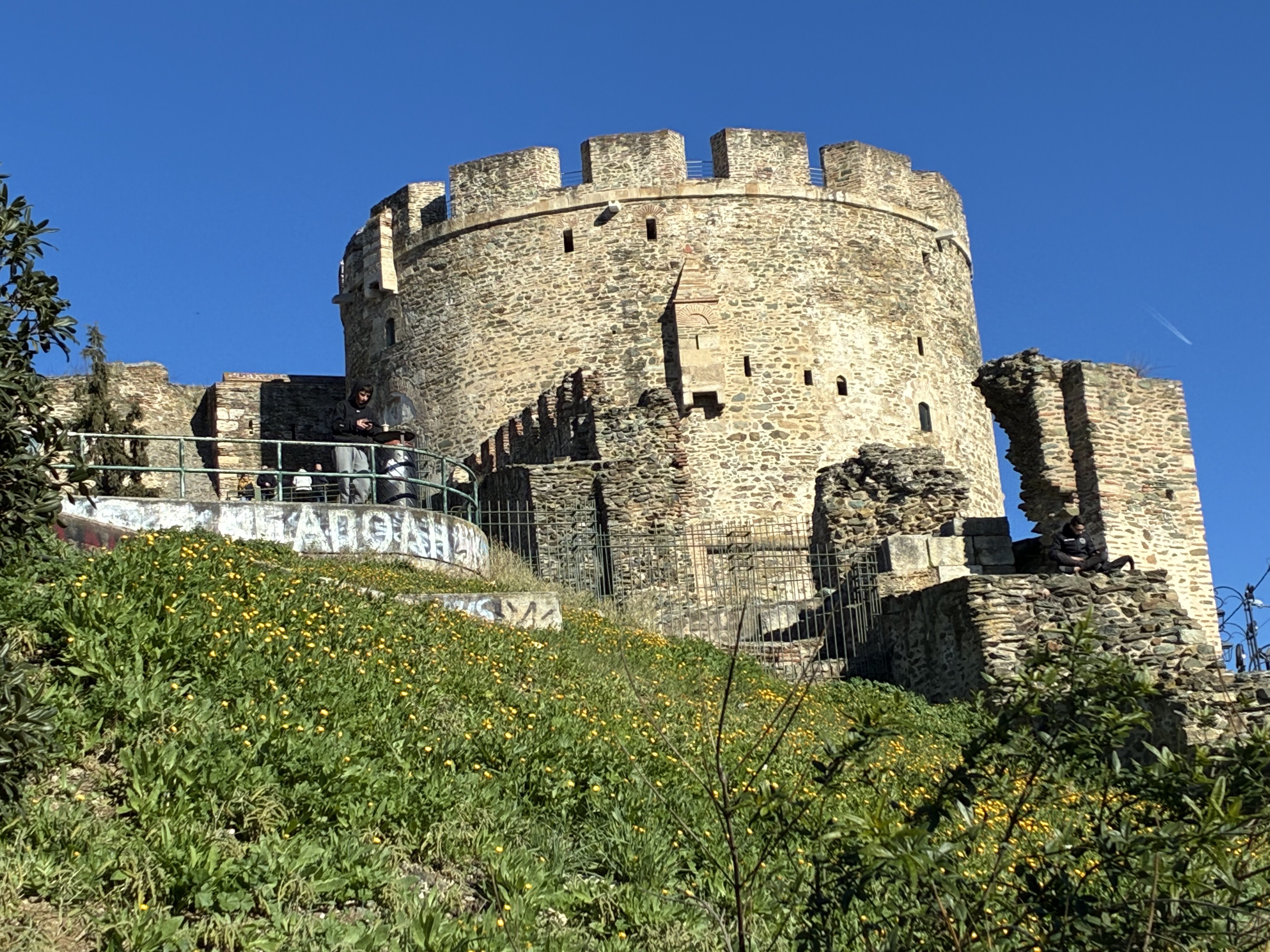
Trigonion Tower (Thessaloniki)
Historical Monument · Greece
On this page
About Trigonion Tower (Thessaloniki)
Welcome to Trigonion Tower, widely recognized as the central Trigonion Tower. Located in the heart of Thessaloniki, Central Macedonia, Greece, this destination serves as a primary hub for travelers visiting the region.
Trigonion Tower (Πύργος Τριγωνίου Αλύσεως) is a significant Byzantine fortification monument in Thessaloniki. Located in the Upper Town (Ano Poli) near Vlatadon Monastery, it was part of the city's fortifications. It offers panoramic views of the city and the Thermaic Gulf.
Visit Tips
- The best time to visit is spring or autumn when the weather is pleasant.
- Visit during the day for the best views.
- Wear comfortable shoes as there are uphill paths.
- Bring water and sun protection especially during summer.
Highlights
- Byzantine fortification monument
- Panoramic view of Thessaloniki
- Part of the city walls
- Ideal for photography
Landmarks & Attractions Around Trigonion Tower
When visiting Trigonion Tower, visitors can easily explore surrounding historical landmarks and points of interest, including Vlatadon Monastery and Heptapyrgion Fortress.
About Trigonion Tower
Basic Information
Official Name
Trigonion Tower (Alyseos)
Attraction Type
Byzantine Tower / Fortification Monument
Google Rating
4.7 (7,589)
Plus Code
JXR5+7X Agios Pavlos, Greece
Phone
+30 2313 310400
Address
Agios Pavlos 546 34, Greece
Visiting Hours
Viewing terrace
Open around the clock, free of charge
Tower interior
Daily 09:00–15:00, closed on Mondays
Best Time to Visit
Spring: Pleasant weather, clear atmosphere
Summer: Cooler at morning and sunset, avoid midday heat
Best Time to Visit
Autumn: Mild weather, ideal for walking
Winter: Fewer tourists, clear views
No ticket is required. The viewing terrace is freely accessible at any time, while the tower interior keeps the limited hours shown above and closes on Mondays. These hours follow the information published by the Thessaloniki Tourism Organisation and may change seasonally — confirm with the Ephorate of Antiquities of Thessaloniki City before travelling. Daylight visits are recommended, as the area has limited lighting after dark.
Admission Information
Site Visit
Free for the public
Parking
Free public parking available nearby
Guided Tours
Available through local tourism operators
Location & How to Reach Trigonion Tower in Thessaloniki
Detailed approaches from the airport, stations, the city centre and on foot — choose what suits your pace and luggage.
From the Airport (SKG)
Thessaloniki Airport 'Makedonia' (SKG) is about 18 km southeast. Best reached by taxi, ride-hailing or rental car; there is no direct train.
- •Exit the terminal and use a taxi rank, a ride-hailing app, or a pre-booked transfer to the city.
- •Drive or ride via the city ring road (A24/EO2) and the coastal avenue toward the centre (about 30–45 min).
- •From the centre, continue to the Upper Town by bus, taxi or on foot as described above.
Taxi / Ride-hailing
Taxis and ride-hailing apps operate across the city and are the easiest door-to-door option, especially with luggage or in the heat.
- •Hail a taxi on the street, use a ranked stand, or book via a ride-hailing app.
- •Ask for the Upper Town / Trigonion Tower (Πύργος Τριγωνίου, Άνω Πόλη).
- •The car can drop you on the approach road; the last part is a short walk up.
From the Bus / Train Station
The central coach and railway stations (New Station) sit west of the centre; city buses link them to the Upper Town.
- •From the station forecourt, take a city bus toward the city centre / Upper Town.
- •Change to a line that climbs the Upper Town, or transfer near Aristotelous Square.
- •Finish the last stretch on foot along the stone-paved lanes to the tower.
Public Transport (Bus)
OASTH city buses serve the Upper Town; the final approach is on foot up steep lanes.
- •Use the OASTH journey planner or a maps app to find a line to the Upper Town (Ano Poli).
- •Buy and validate a ticket before boarding (paper or mobile) — inspectors fine without one.
- •Alight at the highest convenient stop, then walk the last 5–10 minutes uphill to the walls.
From the Centre (White Tower)
About 3 km uphill to the Upper Town (Ano Poli). Reachable by city bus, taxi or on foot.
- •Start at the White Tower on the waterfront and head inland along the central avenues.
- •Take a city bus climbing toward the Upper Town, or walk up through the Ladadika and Upper Town streets.
- •Alight near the Acropolis walls and follow the footpath to the Trigonion Tower viewpoint.
Walking
A scenic 30–40 minute uphill walk from the waterfront through the historic centre and Upper Town.
- •Begin at the waterfront and climb through the Ladadika and Agias Sofias districts.
- •Continue up the stepped, stone-paved lanes of the Upper Town.
- •Follow the city wall eastward to the Trigonion Tower viewpoint.
Driving
Navigate to the Upper Town; parking is limited, so plan to leave the car on the approach roads.
- •Set the destination to the Upper Town (Ano Poli); the historic core is pedestrian-priority.
- •Use a public car park or free roadside space on the approach roads, not inside the lanes.
- •Walk the final stretch — vehicles cannot reach the tower door.
Weather & Forecast
Live conditions and the coming days for the Upper Town of Thessaloniki, so you can plan whether to bring a layer or an umbrella.
Loading current conditions…
History & Significance of Trigonion Tower
History & Construction
The tower stands at the northern end of the eastern wall of the acropolis (Upper Town), close to the Vlatadon Monastery, where the northern and eastern sections of the circuit meet. In its present form it is generally regarded as an artillery tower raised in the late 15th century under Ottoman rule, after the conquest of 1430, to strengthen the sector at which most attacks had been concentrated; an earlier, late Byzantine origin has also been proposed, and the dating remains under discussion.
Architecture
Unlike the square and polygonal towers found elsewhere along the circuit, the Trigonion Tower has an unusual triangular ground plan, which also gives the monument its name. It is built as a heavy artillery tower in the masonry typical of the city's fortifications — rubble stone bedded in mortar, with courses of brick and reused material from earlier buildings — and was designed to command the slopes below the acropolis. Locals call it the balcony of Thessaloniki: on a clear day the view reaches as far as Mount Olympus, some 150 km away.
Cultural Significance
The tower forms part of the fortification system of Thessaloniki, whose walls survive over a length of some 4 km and rank among the best-preserved city walls of the Byzantine world. Together with the nearby Vlatadon Monastery and the Heptapyrgion fortress, it documents the defensive and religious landscape of the Byzantine acropolis.
Protection & Conservation
The monument is protected under Greek legislation on antiquities (Law 3028/2002) and is managed by the Ephorate of Antiquities of Thessaloniki City under the Hellenic Ministry of Culture. It is registered in the National Archaeological Cadastre, and the city walls of which it forms part are included in the UNESCO World Heritage inscription of 1988.
Historical Timeline of Trigonion Tower
From the Byzantine fortification system of Thessaloniki to a protected monument today.
The fortifications of Thessaloniki
Thessaloniki was already fortified in late Roman times, and the circuit of walls that survives today largely follows the late Roman to early Byzantine enceinte, repaired repeatedly over the centuries. The city grew into one of the most important cities of the Byzantine Empire — often described as second only to Constantinople — under the patronage of Saint Demetrius.
Sieges and repairs
The walls were tested again and again: by Slavic and Arab attacks, by the wars with Bulgaria, and by the Norman capture of the city in 1185. Each phase left its marks of repair and rebuilding in the masonry, which is why the circuit shows several distinct building periods.
The acropolis circuit
The Upper Town was enclosed by its own line of fortification, the acropolis circuit, which formed the strongest sector of the city's defences. The tower's later position — at the northern end of the eastern wall, where the northern and eastern sections meet — lies at one of the most exposed points of that circuit.
Ottoman conquest
Thessaloniki was taken by the Ottoman army in 1430, after a siege recorded by the eyewitness Ioannis Anagnostis. Control of the city passed from Venice, which had held it since 1423, to the Ottoman authorities.
The tower is raised
In its present form the tower is an artillery fortification raised in the late 15th century by the Ottoman authorities, to reinforce the sensitive point at which most attacks on the city had been concentrated. Some researchers argue for an earlier, late Byzantine origin, and the dating continues to be discussed.
Ottoman period
After the Ottoman conquest of 1430 the walls continued to serve as the city's defensive enceinte. The acropolis area kept its residential character; the traditional Macedonian houses that give the Upper Town its present appearance date mostly from the 18th and 19th centuries.
Modern era
Thessaloniki was incorporated into the Greek state in 1912. The walls gradually lost their military function and were placed under state protection as monuments. The Upper Town survived the great fire of 1917 largely intact and retains its traditional urban fabric.
UNESCO World Heritage
UNESCO inscribed Paleochristian and Byzantine Monuments of Thessaloniki on the World Heritage List under criteria (i), (ii) and (iv). The property covers 5.327 hectares and includes the city walls, some 4 km of which survive with minimal losses; the tower forms part of that component, as does the nearby Vlatadon Monastery.
Protection and management
The monument is protected and managed by the Ephorate of Antiquities of Thessaloniki City under the Hellenic Ministry of Culture, and is registered in the National Archaeological Cadastre. Consolidation works have been carried out on the tower, which is open to the public; the viewing terrace is freely accessible around the clock, while the interior keeps limited hours.
Dates and attributions concerning medieval fortifications are revised as research progresses. Where scholarly opinion differs, this page sets out the range of views rather than a single definitive date.
The UNESCO World Heritage Property
The 15 component monuments inscribed on the World Heritage List in 1988.
Trigonion Tower forms part of component No. 1 — the city walls, some 4 km of which survive, including the Heptapyrgion fortress.
- 1City walls (c. 4 km), including the Heptapyrgion fortress
- 2Rotunda (Church of Agios Georgios)
- 3Church of the Acheiropoietos
- 4Church of Agios Demetrios
- 5Church of Hagia Sophia
- 6Church of Panagia Chalkeon
- 7Church of Agios Nikolaos Orphanos
- 8Church of Agios Panteleimon
- 9Church of the Holy Apostles
- 10Church of the Transfiguration of the Saviour
- 11Church of Agia Aikaterini
- 12Church of Profitis Ilias
- 13Vlatadon Monastery
- 14Byzantine Bath of the Upper Town
- 15Church of Hosios David (Latomou Monastery)
Source: UNESCO World Heritage Centre, property No. 456 (Paleochristian and Byzantine Monuments of Thessaloniki), inscribed in 1988 under criteria (i), (ii) and (iv); property area 5.327 hectares.
Legends, Traditions & Stories
Folk traditions, religious beliefs and local customs connected with the tower.
The chain across the harbour
Folk traditionThe tower's second name, Alyseos (of the Chain), is linked to a local tradition that a great chain was stretched from this point towards the harbour to prevent hostile ships from entering the port. The chain gave the tower its name, and the story survives in local tradition and in the monument's own designation.
Why it is called Trigonion
DocumentedTrigonion means triangle in Greek, and the tower's triangular plan distinguishes it from the square and polygonal towers found elsewhere along the circuit. How the name arose is explained in more than one way: it has been connected with the account of Ioannis Anagnostis, eyewitness of the 1430 siege, who refers to the Trigonio where the attackers set their ladders; and with the triangular projection of the northern wall in which the gate of Anna Palaiologina opened. The triangular plan itself is documented; the origin of the name is still discussed.
Fire signals along the walls
Folk traditionLocal tradition recounts that beacon fires were lit along the acropolis walls to pass warning signals between the fortresses around the Thermaic Gulf. Beacon signalling is attested elsewhere in the medieval Mediterranean, but its use at this particular tower belongs to tradition rather than to documented evidence.
The protector of the city
Religious traditionThessaloniki has venerated Saint Demetrius as its patron and protector since early Christian times, and popular tradition credits him with the city's survival through sieges and fires. The cult of Saint Demetrius is historically documented; belief in his protection of the walls belongs to religious tradition.
The sunset gathering
Local customIn recent decades the tower and the adjoining stretch of wall have become one of the best-known places in the city from which to watch the sunset over the Thermaic Gulf — a habit shared by residents and students rather than an ancient legend.
Entries labelled Folk tradition, Religious tradition or Local custom reflect oral tradition and popular belief. They are presented separately from documented historical and archaeological evidence and should not be read as established fact.
Recommended Route
A half-day walk linking Trigonion Tower with the other monuments of the Upper Town — several of them UNESCO-listed in their own right.
Start from the city centre or the waterfront
Climb through the streets of the Upper Town (Ano Poli) towards the acropolis walls
Reach Trigonion Tower and its viewing terrace — the balcony of Thessaloniki
Follow the adjoining stretch of city walls towards the Heptapyrgion fortress
Visit the Vlatadon Monastery, a UNESCO-listed monument of the 14th century
Continue to the Byzantine Bath of the Upper Town, also UNESCO-listed
Descend through the traditional Macedonian streets of Ano Poli
Return to the city centre along the waterfront
Suggested Routes & Itineraries
Pick a pace and a focus — from a quick half-day walk to a full day, or a route matched to your travel style.
By duration
Half-day walk
≈ 3–4 hoursA compact loop linking the tower with the highlights of the Upper Town.
- 1Start from the waterfront or Aristotelous Square.
- 2Climb the stone lanes of the Upper Town to the Acropolis walls.
- 3Reach the Trigonion Tower viewpoint — the 'balcony of Thessaloniki'.
- 4Follow the walls toward the Heptapyrgion.
- 5Visit Vlatadon Monastery, then descend through the old quarter.
Full-day exploration
≈ 6–7 hoursCombine the Upper Town monuments with the city-centre Byzantine heritage.
- 1Morning: Trigonion Tower, the walls and Vlatadon Monastery.
- 2Late morning: Heptapyrgion and the Byzantine Bath.
- 3Lunch in the Upper Town or the centre.
- 4Afternoon: Rotunda, Hagia Sophia and Agios Dimitrios in the centre.
- 5Evening: return to the walls for the sunset.
By traveller type
Families with children
Short, manageable stretches with history made fun and plenty of rest stops.
- 1Take a taxi or bus most of the way up to spare little legs.
- 2Explore the viewpoint and open ramparts with a 'spot the ship' game.
- 3Reward the climb with a treat at an Upper Town café.
- 4Keep the walk gentle and head back before tiredness sets in.
Photography & nature
Golden-hour and blue-hour timing for the best light over the city and gulf.
- 1Scout compositions on the walls during the afternoon.
- 2Shoot the sunset over the Thermaic Gulf from the tower.
- 3Stay for blue hour and the first city lights.
- 4Return at first light for soft, crowd-free frames.
Low-mobility / accessible
Views without the steep climb — reachable viewpoints and flat alternatives.
- 1Drive or taxi to an Upper Town square that has a viewpoint.
- 2Enjoy panoramic views without climbing the tower itself.
- 3Use the seafront promenade and centre squares for flat walking.
- 4Plan rest stops; surfaces near the walls are uneven.
Best Time to Visit — Seasonal Strategy
What to expect across the year in Thessaloniki's Upper Town, and how to plan around it.
| Season | Typical weather | Best for | Tips |
|---|---|---|---|
| Spring (Mar–May) | Mild and bright, with blooming gardens and the occasional shower. | Walking the walls, photography, and the UNESCO churches. | Dress in layers; a light rain layer handles passing showers. |
| Summer (Jun–Aug) | Hot, dry and sunny, with strong midday sun and little rain. | Early-morning and sunset visits; the tower is a famous sunset spot. | Visit at opening or near sunset; carry water, a hat and sunscreen, as shade is limited. |
| Autumn (Sep–Nov) | Warm at first, then mild, with clear light and fewer crowds. | Panoramic walks, clear photography and relaxed sightseeing. | Generally stable; a light jacket covers cooler evenings. |
| Winter (Dec–Feb) | Cool and rainy, with occasional cold snaps and crisp clear-view days. | Quiet visits and atmospheric, crowd-free viewpoints. | Check wind and rain; some facilities keep reduced hours. |
Spring (Mar–May)
Typical weather: Mild and bright, with blooming gardens and the occasional shower.
Best for: Walking the walls, photography, and the UNESCO churches.
Tips: Dress in layers; a light rain layer handles passing showers.
Summer (Jun–Aug)
Typical weather: Hot, dry and sunny, with strong midday sun and little rain.
Best for: Early-morning and sunset visits; the tower is a famous sunset spot.
Tips: Visit at opening or near sunset; carry water, a hat and sunscreen, as shade is limited.
Autumn (Sep–Nov)
Typical weather: Warm at first, then mild, with clear light and fewer crowds.
Best for: Panoramic walks, clear photography and relaxed sightseeing.
Tips: Generally stable; a light jacket covers cooler evenings.
Winter (Dec–Feb)
Typical weather: Cool and rainy, with occasional cold snaps and crisp clear-view days.
Best for: Quiet visits and atmospheric, crowd-free viewpoints.
Tips: Check wind and rain; some facilities keep reduced hours.
Patterns summarise the 30-year climate normals (1991–2020) for Thessaloniki. Always check the official forecast before you travel, as conditions vary year to year.
Visitor Facilities & Services
The types of services available in the monument area and the Upper Town (Ano Poli).
This is a non-commercial educational site. We describe service types only and do not recommend, rank or link to any individual business.
Restrooms (WC)
No public toilets operate inside the monument itself. Restrooms of the kind found in cafés, restaurants and municipal facilities are concentrated in the squares of the Upper Town and in the city centre.
Tip: plan ahead and use facilities in the city centre or at a café before the climb; municipal facilities keep seasonal opening hours.
Parking
The Upper Town has narrow, steep streets with limited on-street parking. Free public street parking of limited capacity is usually available along the approach roads and near the monument area, while paid municipal car parks and garages operate in the city centre.
Tip: spaces fill quickly at weekends and on public holidays — consider public transport, a taxi, or walking the last stretch.
Food & Drink
No refreshment stand operates at the monument. Within walking distance in the Upper Town you will find the usual Greek food-service types: traditional tavernas, small-plates venues (ouzeri / mezedopoleio), cafés, bakeries and street-food kiosks. A wider selection is available in the city centre and along the waterfront.
Tip: carry water with you — the walk up is steep and shade is limited around midday.
Accommodation
Accommodation near the site is mostly small in scale: guesthouses and boutique hotels in restored Upper Town houses, rooms to let, hostels and short-stay apartments. Larger business and conference hotels are concentrated in the city centre and along the waterfront.
Tip: staying in the Upper Town suits travellers who want a quiet historic neighbourhood; the centre offers better transport connections.
Shops & Groceries
Daily needs are covered by small grocery shops, mini-markets, bakeries and neighbourhood kiosks (periptero) in the Upper Town. Full-size supermarkets, pharmacies and retail chains are found in the city centre and along the main avenues.
Tip: small shops often close in the afternoon and on Sundays — buy water and snacks in advance.
Fuel & EV Charging
Neither fuel stations nor electric-vehicle charging points are located inside the historic Upper Town; they are found on the city's main avenues, on the ring road, and at public car parks and shopping centres. Charging networks here generally use the standard European connectors (Type 2 / CCS).
Tip: if you drive an electric car, charge before entering the Upper Town and confirm connector compatibility with your rental provider.
Shade, Water & Seating
The site itself is largely open and exposed, with little natural shade and few benches along the approach paths. Shaded rest areas, drinking fountains and seating are typically found in the Upper Town squares and at viewpoints.
Tip: in summer, visit early in the morning or near sunset, and bring a hat, water and sun protection.
Accessibility
Reaching the tower involves steep uphill streets and uneven stone paving; the route is not step-free and is generally not suitable for wheelchairs or visitors with limited mobility. Vehicles can stop on the approach roads, but a walk over sloping ground remains necessary.
Tip: visitors with limited mobility may prefer the panoramic views from the Upper Town squares and other accessible viewpoints.
Pharmacy & Medical Care
No pharmacy or clinic operates inside the monument area. Pharmacies are common in the Upper Town and the city centre, while a hospital and 24-hour pharmacies are concentrated in the centre.
Tip: pharmacists can advise on minor issues; for a medical emergency dial 112 (Europe-wide).
Tourist Information & Help
There is no ticket office or information desk at the tower itself. General tourist information is offered by the city's official tourist points and the region's tourism portals, both online and at central locations.
Tip: save an offline map before climbing, as mobile signal can weaken among the walls.
Visitor Etiquette & Protection of the Monument
Basic rules to follow when visiting a protected archaeological site.
Recommended
- Keep to the existing paths and do not walk on the masonry of the walls.
- Take your rubbish with you — few bins are provided in the monument area.
- Personal, non-commercial photography is generally permitted; tripods and professional equipment may require authorisation.
- Respect the residents of the Upper Town: it is a living neighbourhood, not an open-air museum.
- Keep dogs on a lead and under control.
- Supervise children — the terrain includes steep slopes and uneven ground.
Please avoid
- Do not climb on the monument, the walls or the parapets.
- Do not remove stones, bricks, plants or soil from the site.
- Do not light fires, barbecue or camp within the monument area.
- Do not leave graffiti, carve inscriptions or attach anything to the masonry.
- Do not fly a drone over an archaeological site without the authorisation required by Greek law.
- Do not use metal detectors or dig into the ground.
The above is a general summary of the obligations arising from Greek legislation on the protection of antiquities (Law 3028/2002 on the Protection of Antiquities and Cultural Heritage in General). For the current, legally binding text, consult the Hellenic Ministry of Culture or the Ephorate of Antiquities of Thessaloniki City.
Top Photo Spots
Main Viewpoint
The place where you can take the most classic photos of the tower and the city.
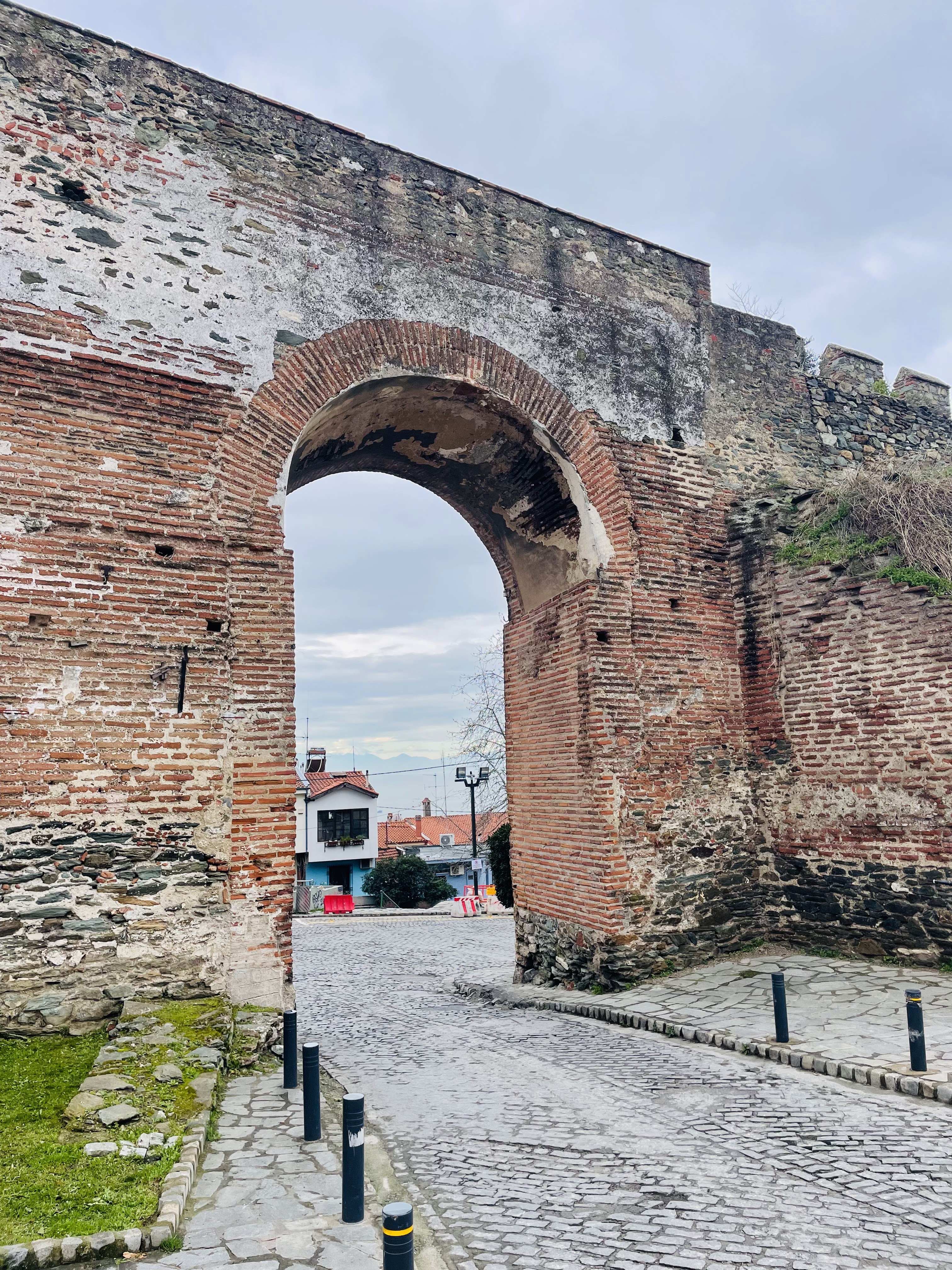
Sea View Point
Ideal location for photos of the city and the Thermaic Gulf.
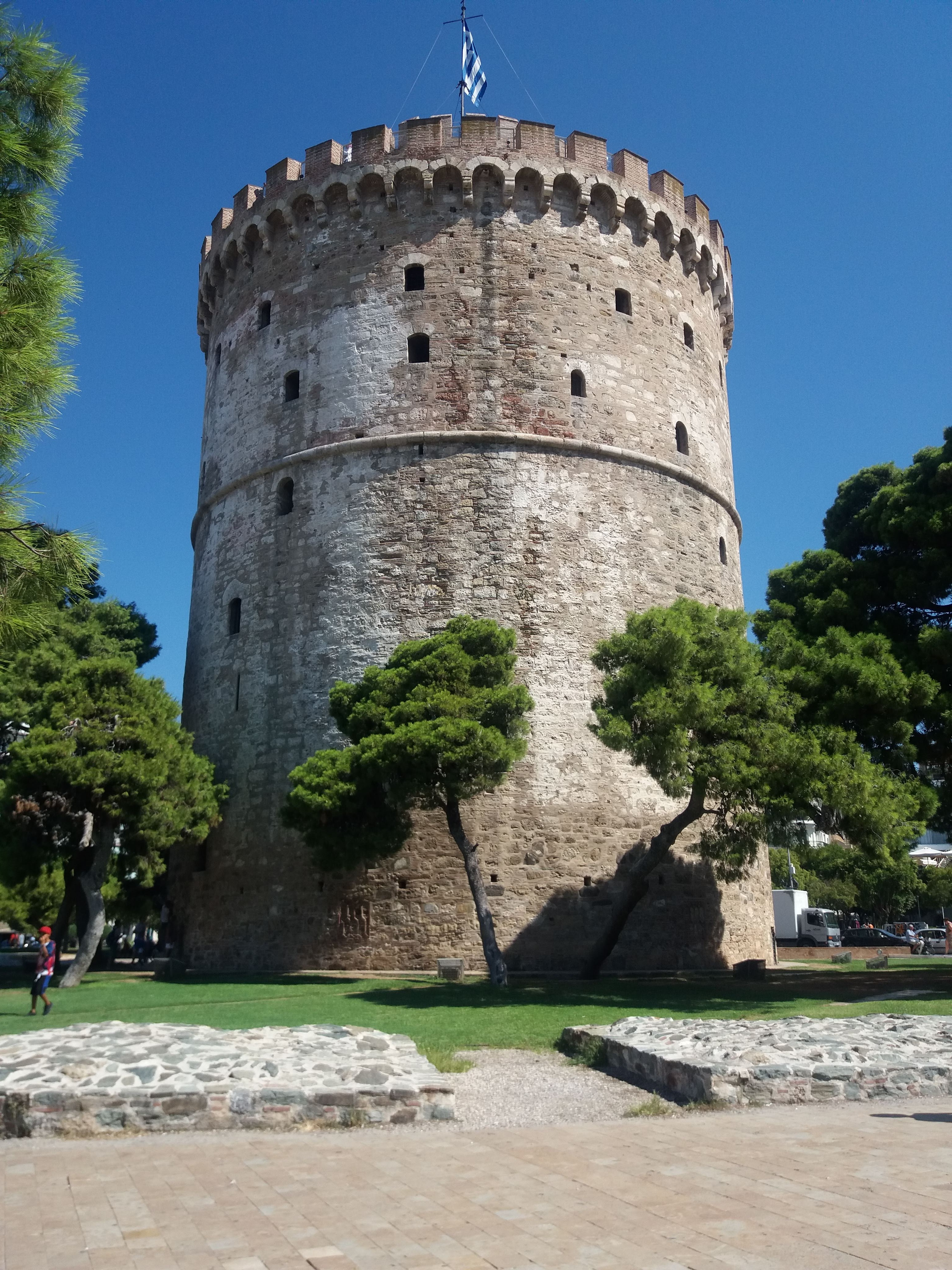
The Walls
Impressive Byzantine architecture near the tower.
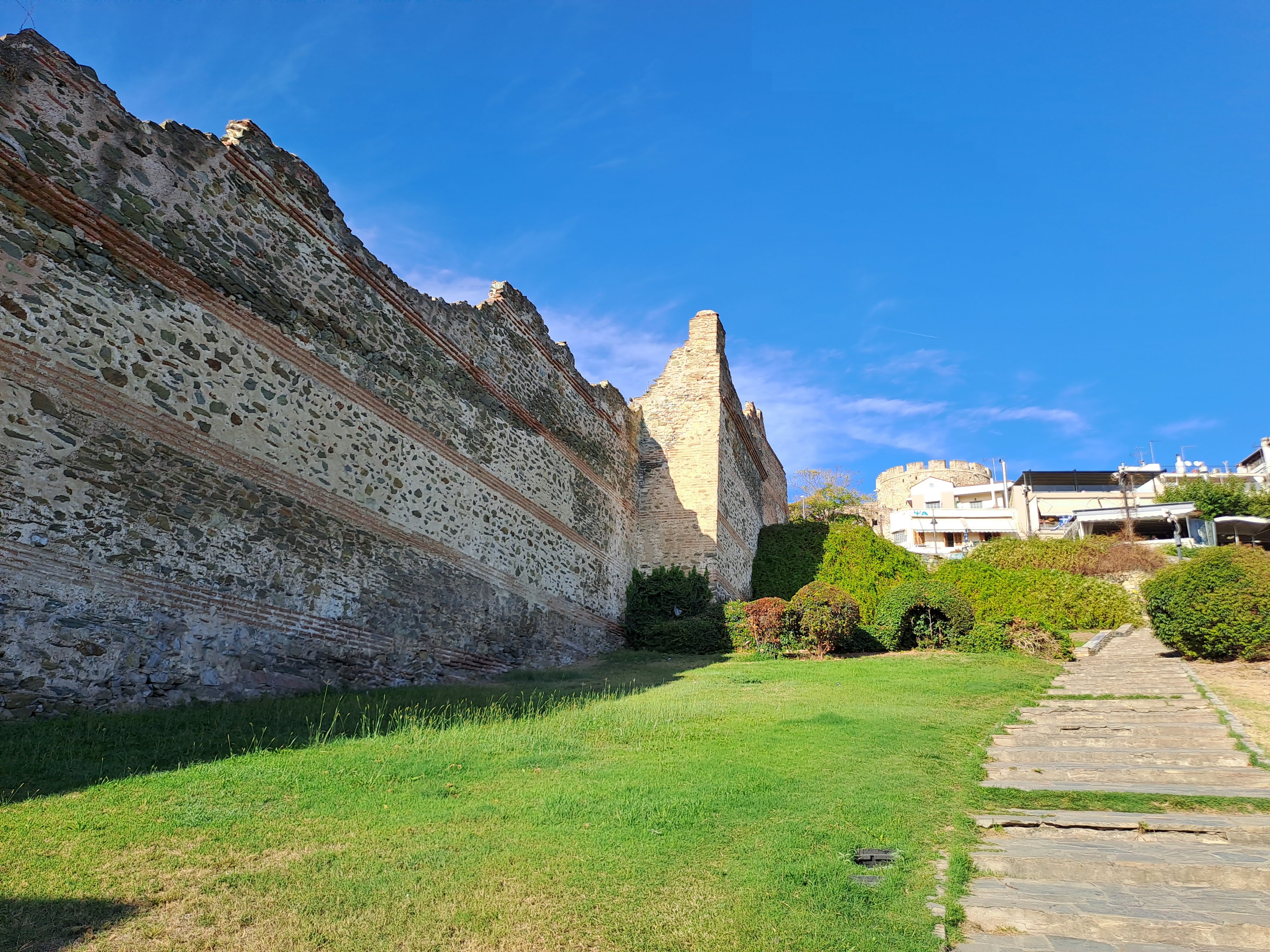
Panoramic View
Thessaloniki city from above.
Photo Gallery
Thessaloniki from Above
Trigonion Tower
View of the city
The Byzantine walls
Thermaic Gulf
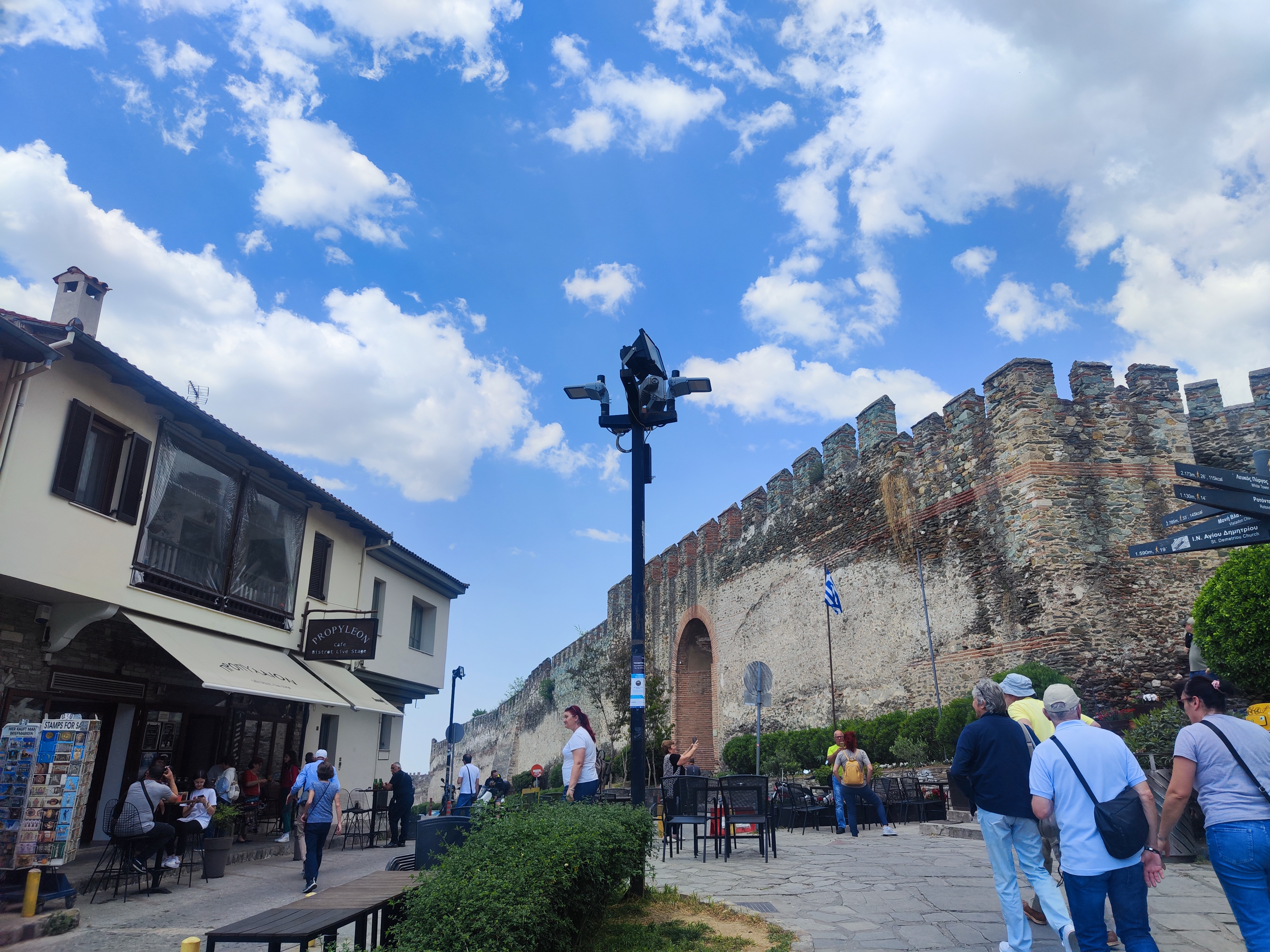
Upper Town
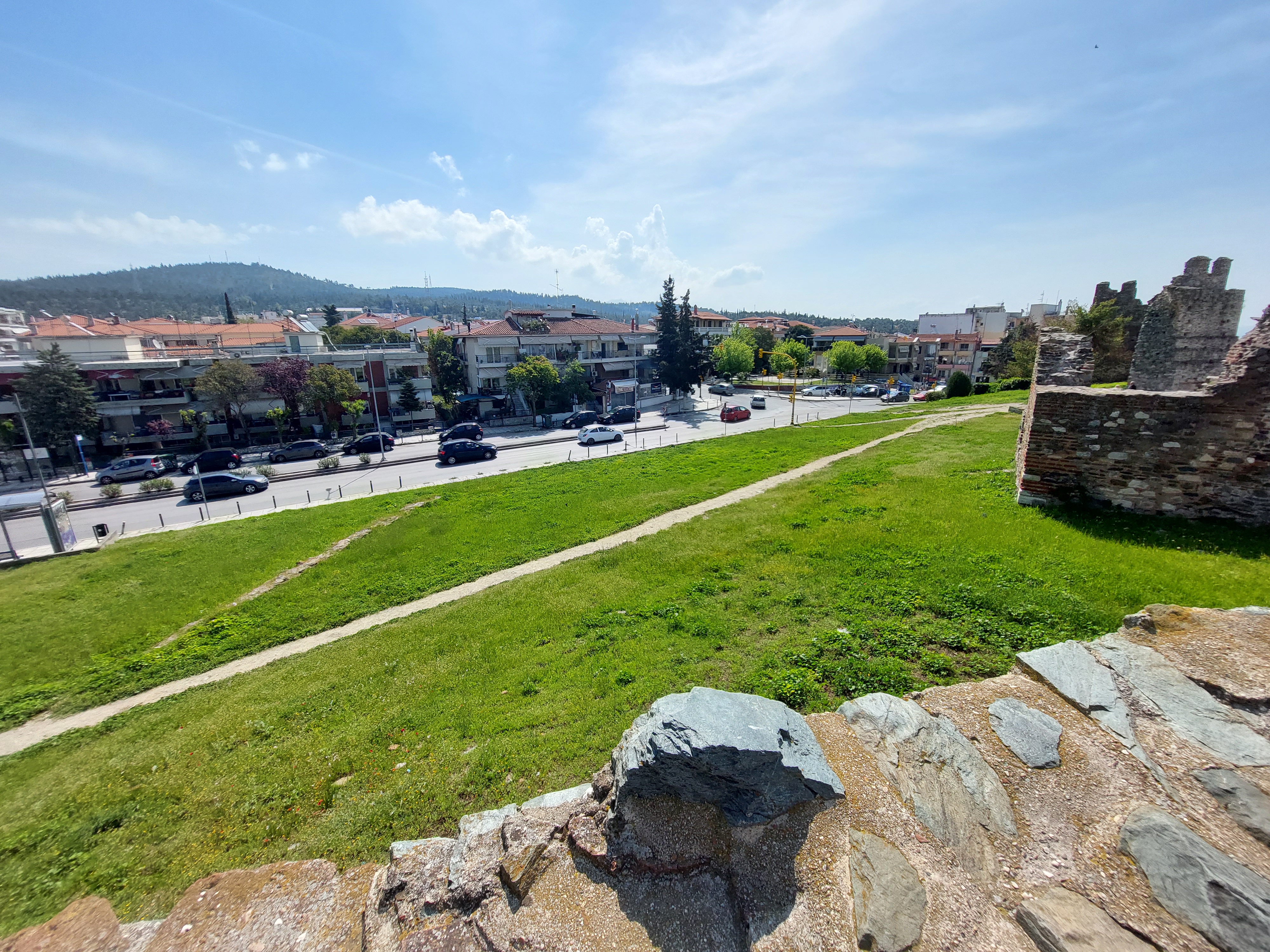
Panoramic view
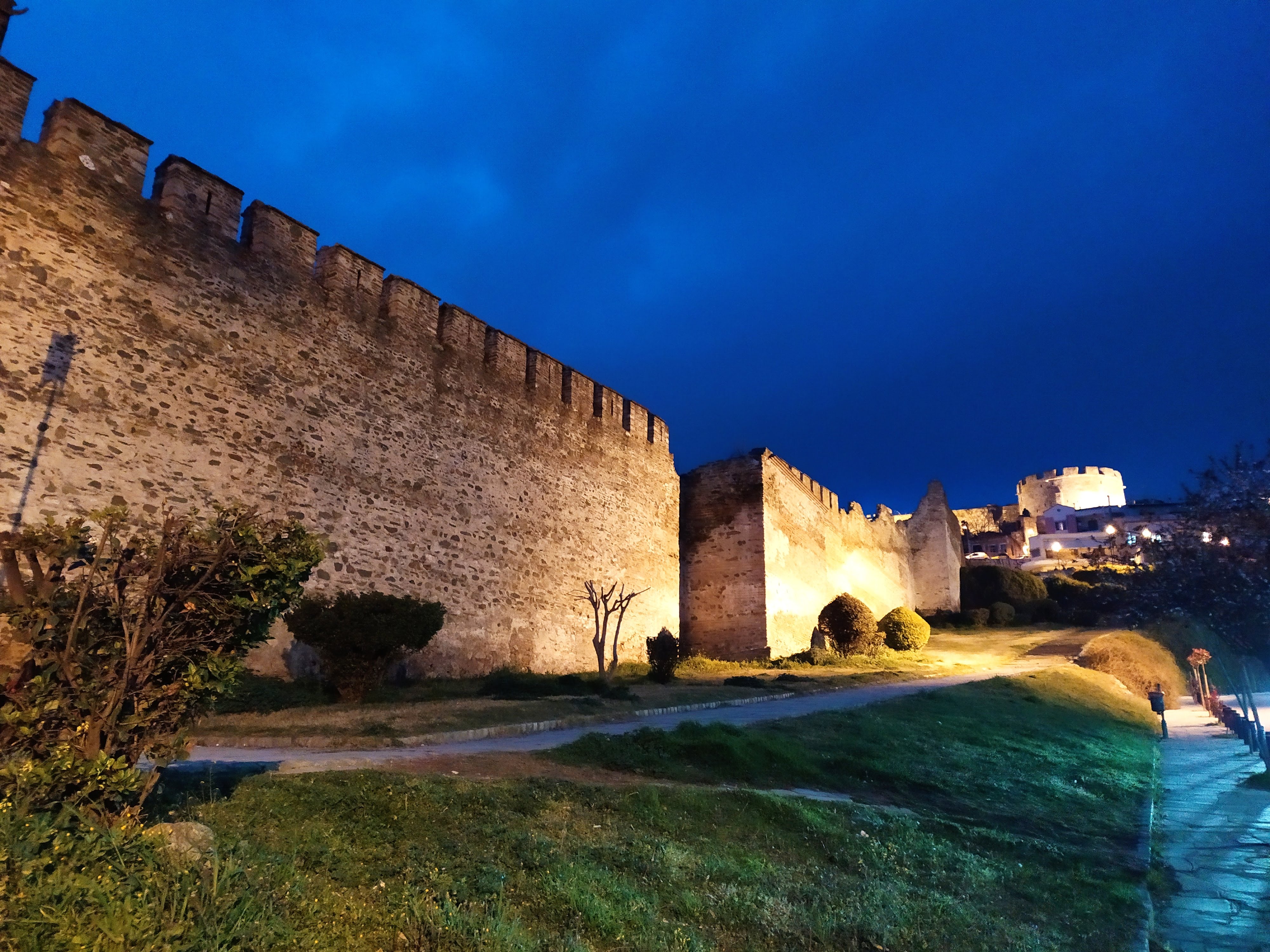
The tower architecture
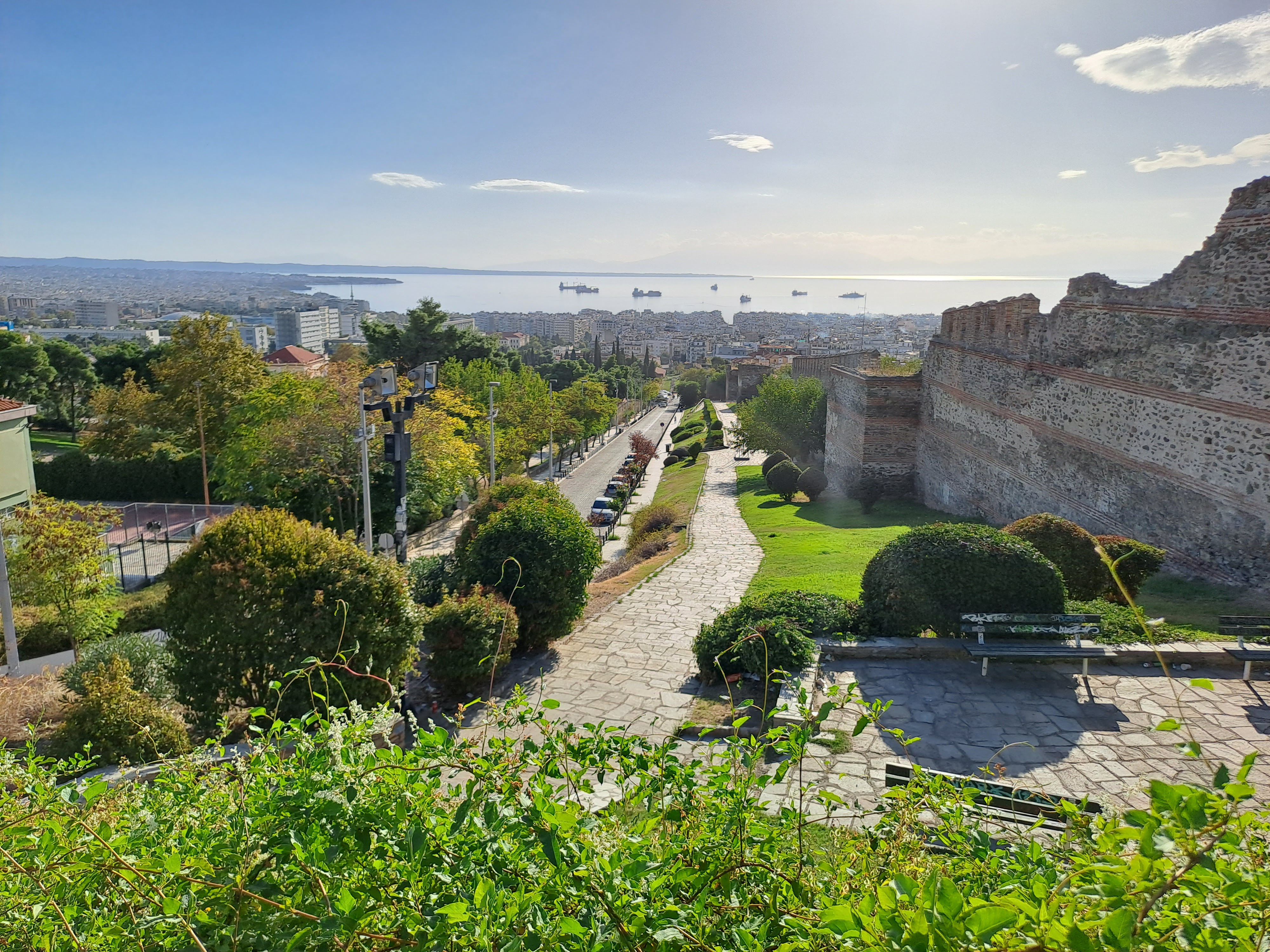
Vlatadon Monastery
Visitor Reviews
Reviews can be viewed via Google Maps.
Incredible place! Offers panoramic views of Thessaloniki. Recommended to visit in spring.
Went with my family and it was excellent. Calm and historical place, perfect for family visit.
Very beautiful place for walking. The view is superb. Had a bit of difficulty finding parking on the weekend.
For Thessaloniki, this is one of the top historical attractions you should see.
Wonderful architecture and history. Quiet place away from the city noise.
Perfect place for photography. The view of the city is magical.
Frequently Asked Questions
Quick answers about visiting Trigonion Tower in Thessaloniki.
Trigonion Tower stands in Agios Pavlos, Thessaloniki, in Central Macedonia, Greece. It sits in the Upper Town (Ano Poli) on the eastern stretch of the Byzantine acropolis walls.
References & Official Sources
The official and heritage-institution sources on which this guide is based.
Hellenic Ministry of Culture
The competent authority for antiquities and monuments in Greece; issues regulations, permits and conservation policy.
https://www.culture.gov.gr/
Ephorate of Antiquities of Thessaloniki City
The local service of the Ministry of Culture directly responsible for the protection, study and management of the monument and the city walls.
https://www.efapoth.gr/
National Archaeological Cadastre
Official national GIS register of archaeological sites and of monument protection boundaries.
https://www.arxaiologikoktimatologio.gov.gr/
UNESCO World Heritage Centre
Official entry for Paleochristian and Byzantine Monuments of Thessaloniki, inscribed on the World Heritage List in 1988.
https://whc.unesco.org/en/list/456/
Greek National Tourism Organisation (GNTO)
The official national tourism authority of the Hellenic Republic.
https://www.visitgreece.gr/
Region of Central Macedonia
Official regional tourism portal of Central Macedonia.
https://visit-centralmacedonia.gr/
Thessaloniki Tourism Organisation
Official city tourism organisation of the Municipality of Thessaloniki.
https://thessaloniki.travel/
This site is an independent, non-commercial educational project and is not affiliated with any of the organisations listed above. Content is compiled from publicly available official sources; please verify access and opening arrangements with the competent authority before travelling.
Map Location
Agios Pavlos 546 34, Greece
For official updates and regional tourism information, visit Greece / Central Macedonia Official Tourism Portal